Metal Roofing in Charlotte, NC
Charlotte Roof Master installs standing-seam and corrugated metal panels that protect homes and businesses for 40-50 years in our humid, storm-prone climate. Metal roofing resists hail, wind, and intense afternoon thunderstorms better than asphalt shingles. Call 704-476-1263 today for a free inspection and estimate.
Call (704) 476-1263Metal Roofing: Durability & Protection for Charlotte Homes
Metal roofing is the installation of standing-seam panels, corrugated sheets, or exposed-fastener systems over your roof's structural deck. Unlike asphalt shingles, metal is permanent, non-combustible, and sheds water efficiently in severe weather. We secure panels to plywood or OSB decking with fasteners—screws or ring-shank nails—and seal all penetrations with flashing and sealant to prevent leaks.
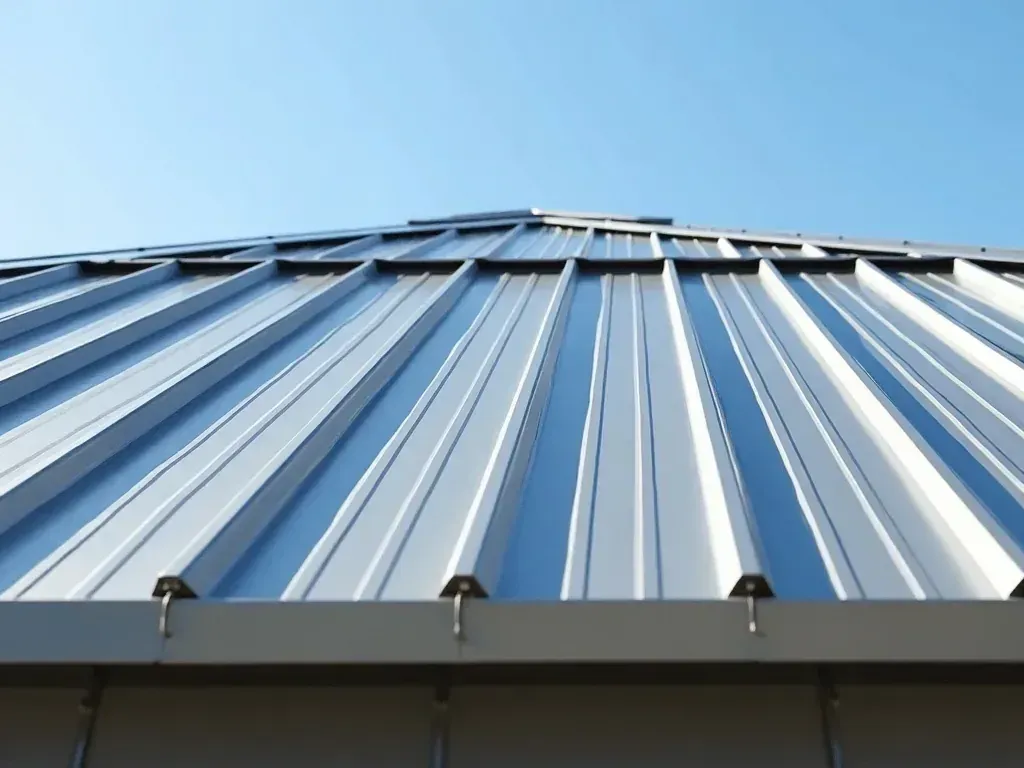
Standing-seam panels (the premium choice) feature vertical ribs running from eave to ridge, creating interlocking seams that shed water without visible fasteners. Corrugated panels cost less. Most homes use Galvalume or Kynar 500 coated steel, aluminum, or stone-coated steel.
A metal roof costs more upfront but outlasts 3-4 asphalt roofs with minimal maintenance. Charlotte homeowners value the energy savings, curb appeal, and fire resistance.
Materials: Gauges, Coatings & Components
Metal roofing systems consist of multiple integrated layers working together to shed water and protect your home.
Panel & Coating: The metal panel is the exposed surface—standing-seam steel, corrugated aluminum, or stone-coated steel—bearing all weather exposure. A coating (PVDF or SMP finish) protects the substrate from UV, salt spray, and rust for 40+ years. Gauge matters: 26-gauge Galvalume ($5–7 per sq. ft.) is cost-conscious; 24-gauge Kynar 500 ($8–12 per sq. ft.) is premium with a 50-year finish; 0.032-inch aluminum resists coastal corrosion.
Support System: Synthetic underlayment or roofing felt underneath panels wicks moisture away from the roof deck. Fasteners—stainless steel screws (hidden in standing-seam clips) or ring-shank nails (exposed-fastener panels)—anchor panels to the deck. Polyurethane sealant and mastic seal fastener holes and flashing edges.
Flashing & Trim: Flashing includes metal trim at valleys, ridges, eaves, step flashing (where roof meets walls), counter-flashing (above step flashing), chimney flashing, and pipe boots for vents. Ridge cap covers the ridge vent at the peak. Drip edge bends at eaves and rakes, diverting water away from fascia and soffit.
Substrate & Ventilation: The roof deck (plywood or OSB sheathing covering rafters and joists) is the structural base. Soffit vents and ridge vent allow attic air circulation. Insulation beneath the deck improves energy efficiency.
Warning Signs You Need Metal Roofing
Consider metal roofing if your roof exhibits any of these issues:
- Leaks around exposed fastener heads that recur after patching—a sign your system is failing.
- Visible oil canning—wavy distortions in flat panels from improper tensioning during installation.
- Rust streaks on white or light asphalt shingles and gutters indicating galvanic corrosion.
- Loose or missing shingles after wind or hail events showing poor wind resistance.
- Persistent granule loss (dark specks in gutters), indicating end-of-life wear and imminent leaks.
- Sagging roof deck or interior water stains suggesting rot, settling, or ponding water.
- Dents from hail on architectural or three-tab shingles—metal resists impact better.
- Desire for a 50-year roof without replacement every 15-20 years.
A free roof inspection determines whether repair, overlay, or replacement is best.
Installation Process: Step by Step
We follow NC Building Code and manufacturer guidelines for every project.
- Roof inspection & deck assessment. We examine rafters, joists, and plywood or OSB for rot, sagging, or settling. We replace damaged sections before installing metal panels. NC R105.1 requires a permit for coverings over 25% of deck area.
- Removal & deck preparation. For tear-off jobs, we remove all existing shingles, felt, and debris. We inspect the exposed deck, replace soft or warped plywood, and install new synthetic underlayment (self-adhered or mechanically fastened).
- Flashing & transitions. Before panels are laid, we install all flashing: step flashing, counter-flashing, chimney flashing, pipe boots, and valley flashing. Properly sealed flashing is the primary leak prevention measure.
- Metal panel installation. Starting at the eave with a starter course, we lay panels in staggered courses from bottom to peak. For standing-seam, we use a power crimper to seal seams and secure panels with hidden fasteners. For exposed-fastener systems, fasteners are sealed with stainless washers and polyurethane sealant.
- Ridge cap & edges. We install the ridge cap over the ridge vent, seal seams, and fasten drip edge at eaves and rakes. Proper gutter slope and downspout placement prevent water backup.
- Cleanup & final inspection. We remove all debris via dumpster and perform a final walk-through confirming tight fasteners, sealed flashing, and code compliance. Most installations take 2–4 days.
Cost Factors for Charlotte Homeowners
Metal roofing costs vary by panel type, material gauge, roof size, pitch, and existing roof condition. Corrugated panels are lowest cost; standing-seam is premium. 26-gauge Galvalume runs $5–7 per sq. ft.; 24-gauge Kynar 500 runs $8–12 per sq. ft. Larger roofs, steeper pitches, and complex designs with dormers or chimneys require more flashing and labor.
Most Charlotte homes see $12,000–$25,000 for standing-seam systems. We provide itemized estimates breaking down materials, labor, and warranties. Many recoup 50–70% via energy savings and home value appreciation over 40 years.
Metal Roofing in Charlotte's Unique Climate
Our humid, subtropical climate poses specific challenges for roofing. High humidity and salt spray accelerate galvanic corrosion on lower-gauge Galvalume—we recommend 24-gauge Kynar 500 for durability. Intense summer thunderstorms require standing-seam design and proper flashing to shed rain without seeping at valleys or penetrations.
Freeze-thaw cycles in winter cause fastener back-out; we use sliding clip systems (not fixed fasteners) to allow thermal expansion. Spring and late-winter hail dents lighter panels but rarely punctures 26-gauge standing-seam systems tested to UL 580 Class 90 uplift ratings for 90+ mph winds.
We inspect roofs annually after major storms to confirm fasteners remain tight and panels haven't shifted.
What's Included in Our Metal Roofing Service
When you hire Charlotte Roof Master, you receive complete installation and support:
- Complete structural inspection of rafters, joists, and plywood or OSB decking to assess repair or reinforcement needs.
- Tear-off of existing roof, including removal of old asphalt shingles, felt, and roofing cement; full deck assessment.
- Installation of synthetic underlayment or self-adhered ice-and-water shield for moisture protection and vapor management.
- Full flashing system: step flashing, counter-flashing, chimney flashing, pipe boots, valley flashing—all sealed with polyurethane sealant.
- Metal panel installation (standing-seam, corrugated, or exposed-fastener) with correct fastener spacing and sealing per manufacturer specs and NC Building Code.
- Ridge cap, drip edge, and soffit trim installation with all seams sealed and fasteners torqued to specification.
- Gutter and downspout integration ensuring proper water drainage away from fascia and home foundation.
- Complete cleanup, debris removal via dumpster, and final roof inspection confirming all components meet code and manufacturer warranty requirements.
Frequently Asked Questions About Metal Roofing
How long does metal roofing last? Standing-seam metal roofs last 40–50 years with minimal maintenance. Asphalt roofs need replacement every 15–20 years. Over a lifetime, metal reduces total maintenance costs by 60% or more.
Is metal roofing loud in rain? No. Underlayment, insulation, and attic mass absorb sound. Metal is no louder than asphalt when properly installed.
Can I install metal roofing over asphalt shingles? In some cases, yes. An overlay costs less upfront but is not recommended in North Carolina—underlying shingles trap moisture and reduce system lifespan. A tear-off and fresh install ensures maximum durability.
What's the difference between standing-seam and corrugated? Standing-seam is premium: hidden fasteners, superior drainage, sleek appearance. Corrugated panels are exposed-fastener systems, less expensive, and popular for agricultural buildings. For residential homes, standing-seam is standard.
How does metal roofing compare to other systems? Asphalt shingles last 15–20 years. TPO and EPDM membranes last 20–25 years. Built-up roofs with tar and bitumen last 15–20 years. Slate and clay tile are durable but expensive. Metal offers the best cost-to-lifespan ratio for most Charlotte homeowners.
What's Included
- Complete structural inspection of rafters, joists, and plywood or OSB decking to assess repair or reinforcement needs.
- Tear-off of existing roof, including removal of old asphalt shingles, felt, and roofing cement; full deck assessment.
- Installation of synthetic underlayment or self-adhered ice-and-water shield for moisture protection and vapor management.
- Full flashing system: step flashing, counter-flashing, chimney flashing, pipe boots, valley flashing—all sealed with polyurethane sealant.
- Metal panel installation (standing-seam, corrugated, or exposed-fastener) with correct fastener spacing and sealing per manufacturer specs and NC Building Code.
- Ridge cap, drip edge, and soffit trim installation with all seams sealed and fasteners torqued to specification.
- Gutter and downspout integration ensuring proper water drainage away from fascia and home foundation.
- Complete cleanup, debris removal via dumpster, and final roof inspection confirming all components meet code and manufacturer warranty requirements.
Our Metal Roofing Process
- Roof inspection & structural assessment. We examine rafters, joists, and the plywood or OSB decking for rot, sagging, or moisture damage. If the substrate is compromised, we replace that section before installing metal panels. We verify NC Building Code compliance—permits are required for roof coverings over 25% of deck area (NC R105.1).
- Removal & deck preparation. For tear-off jobs, we remove all existing asphalt shingles, felt, and debris. We inspect the exposed roof deck and replace any soft, warped, or rotted plywood. We then install new synthetic underlayment (self-adhered or mechanically fastened) to protect the deck and allow vapor to escape without trapping moisture underneath.
- Flashing & transition installation. Before metal panels are laid, we install all flashing: step flashing where the roof meets walls, counter-flashing above step flashing, chimney flashing, pipe boots for vent penetrations, and valley flashing. Properly sealed, correctly-installed flashing is the primary defense against leaks at transitions and penetrations.
- Metal panel layout & installation. Starting at the eave with a starter course, we install panels in staggered courses from bottom to roof peak. For standing-seam systems, we use a power crimper to seal each seam and secure panels with hidden fasteners in the seams. For corrugated or exposed-fastener panels, fasteners are visible but sealed with stainless steel washers and polyurethane sealant.
- Ridge cap, edge trim & gutter integration. We install the ridge cap over the ridge vent, seal the seams, and fasten drip edge at eaves and rakes to direct water into gutters. We ensure proper gutter slope and downspout placement to prevent water backup into fascia or soffit.
- Final cleanup & inspection. We remove all debris—nails, fasteners, scrap metal—using tarps and dumpsters. We perform a final walk-through with you, confirming all fasteners are tight, all flashing is sealed, and the completed roof meets NC Building Code. Installation typically takes 2–4 days depending on roof size, pitch complexity, and weather conditions.
Signs You Need Metal Roofing
6 Warning Signs Your Charlotte Home Needs Metal Roofing
- Leaks around exposed fastener heads or seams that return after patching—a sign your current roof system is failing and recurring repairs are draining your budget.
- Visible oil canning (wavy distortions in the metal surface) caused by improper tensioning or fastener spacing during installation—this doesn't always leak but signals poor craftsmanship.
- Rust streaks on light-colored asphalt shingles or gutters, indicating galvanic corrosion or rusting metal flashing—often a harbinger of widespread corrosion in high-humidity, salt-spray areas.
- Loose or missing asphalt shingles after thunderstorms or spring hail events, showing your roof lacks the wind and impact resistance that metal roofing provides.
- Persistent granule loss on asphalt shingles (appearing as dark specks in gutters), signaling end-of-life wear and imminent leaks from UV degradation—replacement is overdue.
- Sagging roof deck or visible water stains inside the attic, evidence of rot, settling, or ponding water under a membrane system—structural repair and re-roofing are urgent.
Don't just take our word for it — hear from our satisfied customers.
"We were tired of patching leaks every spring. The team installed our standing-seam metal roof in 3 days, and it's survived two hailstorms without a dent. Best investment we made."
— Jessica M., Myers Park
"After getting quotes from three companies, Charlotte Roof Master's estimate was the most detailed. They explained every material choice and didn't push us into unnecessary upgrades. The final bill matched the estimate exactly."
— Robert T., South End
"Our Uptown home is 60 years old with a leaking slate roof. The crew installed a metal roof that matches the neighborhood's character and comes with a 25-year manufacturer warranty. No more leaks, less noise than I expected."
— Angela S., Uptown
Ready to get started? Call us today at 7044761263 for a free estimate.
Free estimates · Licensed & Insured · 25-year warranty
Call (704) 476-1263